
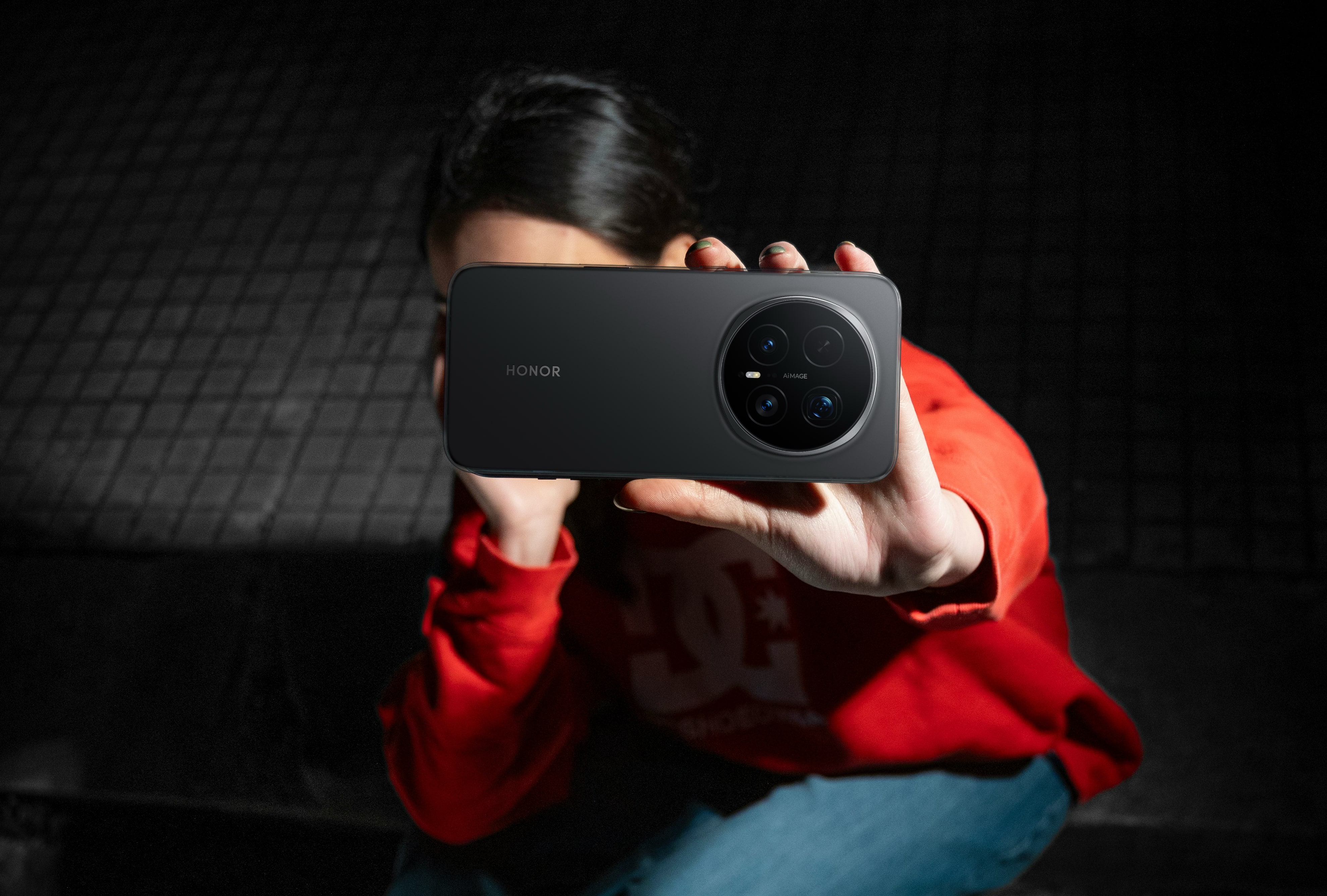
Honor Magic 8 Pro Review: Premium Design Meets Versatile Features
Honor Magic 8 Pro
£1099.99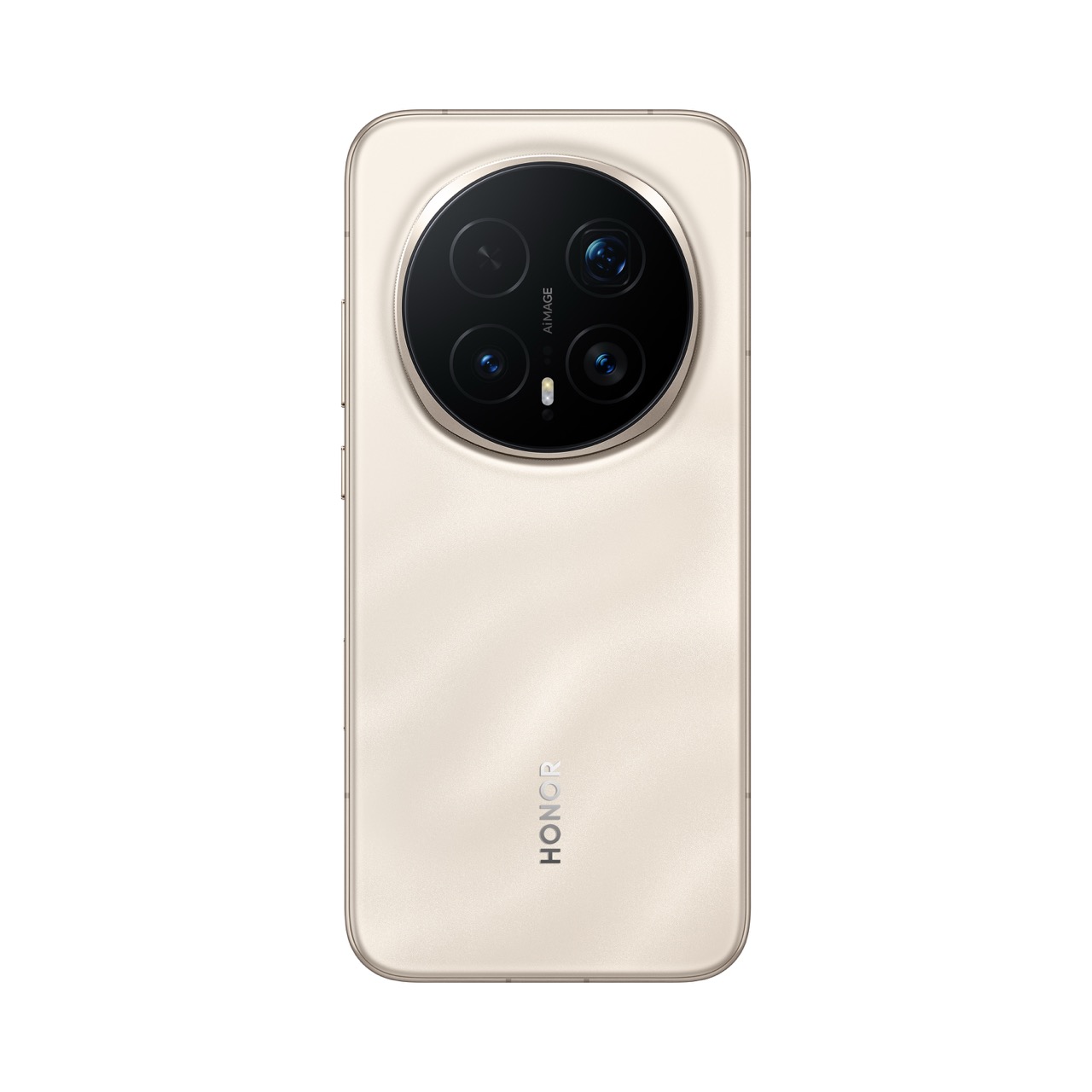
9.1
Pros
- Excellent battery life with fast recharge times
- Camera images are clear, crisp, colour accurate and well defined for all but high-level zoom shots
- Powerful performance never leaves you wanting; it's frankly overkill for most tasks but this does contribute to future proofing (useful with many years of OS updates included)
- Strengthened design that can cope with bumps and scrapes
- Decent video performance (even if the Movie mode is strangely missing)
Cons
- AI image processing can be a little OTT for zoomed shots; software can't quite match improved optics
- Battery isn't as large in capacity as it could have been with a design change to use dual-cell batteries
The battle of the flagship camera phones seems to be never ending, and Honor has launched its latest offering in the form of the Magic 8 Pro.
Introduction

Around this time last year, I was up a mountain taking photos with the Magic 7 Pro. How quick time flies, because today I’m reviewing the successor.
The premium smartphone market has never been so competitive, with Oppo marking its return to the UK, OnePlus still fighting it out, Vivo being popular with importers, and Xiaomi still plodding on despite various issues with stock supply in the UK.
And of course there are the major incumbents in the form of Samsung and Apple.
But Honor has been gaining market share at an impressive rate, restoring much of what was lost when it was part of Huawei and suffered the fate of Trump 1.0.
Freed from the shackles of trade embargoes, Honor has improved by leaps and bounds with a comprehensive portfolio of devices to suit every need, from well specified entry-level devices, to mid-ranges that punch above their weight, foldables that have pushed the boundaries of what is possible – to phones like this, the flagship camera phone.
Honor is also fitting out its latest devices with a myriad of AI features to make the phones more powerful and capable to users, while the pricing remains competitive versus a lot of the competition.
But, as ever, is the phone any good in real life? Manufacturers spend a fortune on slick marketing to showcase features, but what is it like to the actual person using the phone on the daily?

Design

Look at the above image of the Magic 8 Pro and you’ll possibly wonder if I accidentally posted a photo of the Magic 7 Pro. The design changes are minimal on the front and rear, and that’s intentional as Honor has created a unique design language much the same as its rivals like Oppo and Samsung. The centrally mounted camera array protrudes just enough to form a nice rest for your finger to fold the phone steady in portrait mode.
On the side, you’ll see the usual power button and volume keys along the right-hand edge, but now there’s an additional button in the form of the AI key – a touch sensitive button that can also be pressed. It can be set to work in a multitude of ways, but perhaps the most useful is in camera mode where it can act like that of the button on the new iPhone models – to allow you to manage the zoom and operate as a shutter release.
The 6.71-inch OLED display with variable refresh rate up to 120Hz is slightly smaller than last year’s flagship, and smaller still than both the Magic 6 Pro and Magic 5 Pro. The difference is slight, and no longer is the screen as curved at the edges as with earlier models. The phone is also narrower than earlier devices, which makes it easier to use in one-handed operation.

Brightness peaks at 6,000 nits and outdoor visibility is great – but the display experience has been excellent for a number of generations now. It’s a testament to just how good these phones have been for years. Colours are vibrant and there are loads of visual enhancement modes baked into the software to further improve the visuals.
Coupled with a stereo audio setup with enhanced bass amplification, the sound is just as impressive and makes it perfect for enjoying videos or playing games without the need for separate equipment. It’s like a boombox in your pocket (I’m sure there’s a joke in there somewhere).
On the front top of the display is a cut out for both the 50-megapixel selfie camera and a depth-sensor that can securely unlock the phone from your face, including filling in log-in boxes and unlocking other parts of the phone.
In addition to the face unlocking, you can also go with the tried-and-tested fingerprint sensor embedded into the display, which works incredibly quickly and accurately.
Build
The Magic 8 Pro looks and feels premium, which is has to do when it costs over a grand, but the phone has also been designed to be solid and cope with accidental drops and scrapes, using a combination of metal frame with toughened glass. The protection also includes water and dust resistance, with a screen protector also fitted from the factory.

Depending on when you buy, Honor might also include a screen replacement service in the first year (it can be purchased at extra cost otherwise).
With the narrower design compared to earlier Magic Pro models, the phone is comfortable to hold in the hand without a case (as always, I’d recommend buying a third-party one or even an Honor original case as soon as possible).
The key design feature that stands this apart from earlier models, as well as that of most rivals, is that AI button. Right now it can be used for the following features:
- Camera: Slide zoom, hold to focus, long press for video or burst photo mode, take a photo.
- AI Screen Suggestions: Provide recommended AI services based on screen content.
- AI Settings Agent: Control system settings.
- AI Photos Agent: Make AI photo edits with just one tap.
- Honor AI: Access Honor AI settings with one tap.
- AI Memories: Recognise and remember screen content at the tap of a button.
- Google Lens: Translate, identify and search for products.
Camera

For me, and likely many of you, the camera is perhaps the most important aspect of the phone – and like earlier models, there is no shortage of cameras on offer here, offering the usual range of 0.5-100x zoom.

Like ever, you can perhaps ignore the higher levels of zoom for the most part. Even though Honor AI is used to enhance images taken at huge distances, most people will be more interested in the capabilities at more normal, day-to-day, ranges.
That means, the odd ultra-wide landscape shot or group shots, combined with 1x, 2x and 3.7x (the optical length of the telephoto image sensor).
This time around, Honor has prioritised the night performance of the telephoto camera to further boost night shots even at distance. The enhancements also extend to video, with the phone topping out at 4K 120 frames-per-second (or 60fps if you record in HDR mode).
There’s no 8K support and, given 8K TVs are still not a thing for 99% of the population, that’s no bad thing.
While I always use Google Photos to back up my images, to get the most from the camera you will likely want to use the Honor Gallery app to best manage your photos and video, as this is where all of the cool AI features reside to edit your content in post.
Features such as AI Eraser, AI Upscale, AI Cutout, AI Outpainting (expand the image canvas), and AI Colour.
Camera Hardware
The rear camera array includes:
- A 50 MP main camera with a large sensor and optical image stabilization
- A 200 MP periscope telephoto lens (3.7x optical) offering high-quality optical zoom
- A 50 MP ultra-wide camera that also supports macro photography


Photo Quality
View the Google Photos Open Gallery
This gallery will be constantly updated over time with my own content – plus yours!
You can add your own Magic 8 Pro photos and video to share with everyone!
Day or night, the Magic 8 Pro takes well exposed photos with a great deal of clarity and contrast. You can adjust the colour profiles before or after taking a picture, but a lot of the time you’ll be perfectly happy with the result first time.
The night mode performance keeps getting better year-on-year, and soon I expect you’ll be able to get photos in total and complete darkness. At times you can get images that are perhaps a bit too bright and unnatural, but you can easily dial down the exposure to correct.
For fast-moving action in challenging lighting conditions, there is also a Stage mode that increases the shutter speed to reduce motion blur.
The portrait mode feature is also getting better all the time, and at the pre-briefing event last year, I was able to test out the low-light portrait shooting with two very patient models.
Pixel peepers will perhaps notice that at 100% there’s a fair degree of AI enhancement, which won’t be everyone’s cup of tea – but I’ll challenge all of you to notice it when viewed on a smaller display, which is how most people will likely share their images.
The jury will likely never agree whether AI is a good thing for photography, but while it can be considered controversial for the crazy zoomed images where a lot of data is ‘created’ to fill in for a lack of detail, for regular photos the AI is used more for the enhancements you would have traditionally done yourself in a paint package.
There appears to be two directions phone manufacturers are taking when it comes to mobile cameras. One is to keep enhancing the camera image sensors and lenses to try and get as close to the DSLR experience as possible, the other is to use more modest sensors and setups and allow software to enhance the photos – creating photos that are arguably more share-ready than images you might spend time enhancing in Lightroom before letting anyone else see.
Honor appears to be going in the second direction, and some images don’t really stand up to scrutiny if zoomed in to the max, but assuming you’re not taking photos to use in advertising campaigns on roadside billboards, the photos are a lot more ready-to-go on the Magic 8 Pro.
Other features of the Honor Gallery app includes the ability to turn a static photo into a video, using Google AI.
Video Performance
Video recording has often had moments of disappointment in the past, where frames can be dropped for seemingly no reason. It’s something that goes back to when Honor was part of Huawei. As such, anyone wanting a phone for good video capture has usually swerved towards other brands (most see Apple as the definitive standard for video capturing).
I wasn’t able to get any such issues on the Magic 8 Pro. Perhaps this is due in thanks to Qualcomm’s flagship Snapdragon Elite Gen 5 chipset, or better software optimisation. The 120 frames per second capturing is also great for video editors wanting a bit more control in post, although overkill for just about everyone else.
One noticeable omission from the camera interface for video is the Movie mode, although this might be on account of early software on review models. Movie mode allows for you to adjust the colour profiles, activate LOG mode (so you can do colour grading later on) as well as recording at 24fps. It’s not a mode that a lot of people probably use, but it can produce fantastic results for those that do.
It’s loss is a bit of a disappointment, but will hopefully be added in at a later date.
Camera samples


Performance
Powered by a Qualcomm Snapdragon Elite Gen 5 SoC, complete with the latest 5G modem and Wi-Fi 7 (tri-band) support, the Magic 8 Pro is the most powerful Honor to date, with an impressive AnTuTu v11 score of 3,552,768.
To keep the phone going, there’s an impressive 6,270mAh battery inside. Now, on Chinese and global models that could have been as high as 7,200mAh (China) or 7,100mAh (global) but European regulations limits the size of a single battery pack.
12GB of RAM is accompanied by up to 12GB of virtual RAM, and like so many other Honor flagships in recent years, 512GB of storage is standard – and ample for most people.
Global models can go to 1TB with 16GB of RAM, and can be made to run all Google applications and services, but you then have to consider warranty implications and other factors. If you are okay with that, there are various importers that will satisfy your needs – but this review is purely of the UK model.


Everyday Use
When has a flagship ever offered a stuttery, non-buttery smooth, experience? Well, quite.
It’s barely worth mentioning that everything you do on this phone is slick, as you’d expect. Apps load quickly, and with the fast connectivity, whether you’re using mobile data or Wi-Fi, you can expect things to load fast.
The Magic 8 Pro supports ridiculous Wi-Fi speeds of in excess of 5Gbps if you have the right equipment (and Internet connectivity if you fancy some crazy speed test results) and when I popped both an EE and Three SIM in the phone, I was getting faster results than in a Magic V5. Not substantially different I should add, but certainly enough to see that the integrated antennas are top-notch.
Gaming and Intensive Tasks
I’m not a massive mobile gamer, so a lot of the performance is lost on me. I’ll fire up the benchmarks and perhaps play some Genshin Impact or Call of Duty mobile to actually get the phone under any significant load, but even these titles are not able to push the latest generation chipsets to their limits.
A more relevant test for most is the time taken to process videos and image editing, and the phone is exceptionally fast when it comes to onboard video encoding and image processing. If you need to allow an offboard server to enhance an image, or let Google create a video for you, there’s obviously a time impact there – but that’s not down to the phone.
Battery Life and Charging

Battery life is of course a controversial issue because of the limitation of battery capacity for single pack batteries sold within Europe, and dropping from 7,200mAh to 6,270mAh sounds pretty terrible. 6,270mAh is still a huge improvement on the 5,270mAh battery in last year’s Magic 7 Pro.
What really matters though is how long the battery will last, and I was left more than impressed. I was previously impressed with the Magic V5 performance (5,820mAh) – especially given the large internal display requiring quite a bit more power consumption – but the Magic 8 Pro is a big leap, despite the bright display and a more powerful chipset and features that encourage more use of the processor.
It was quite easy to reach six hours of screen-on time and still have 20-30% of battery left. If you were glued to the phone for almost every hour you were awake, you’d probably still manage to keep going until bedtime.
But it isn’t just the battery capacity that impresses, as the phone also charges at 100W wired, or 80W wirelessly. Better yet, for a while now, Honor phones haven’t just required the use of proprietary SuperCharge power adapters.

With any recent USB Power Delivery charger supporting V3.1, you can charge at full speed also. That means you can recharge at max speed from a number of power adapters from the likes of Anker and UGreen, including power banks and portable power stations.
It can’t be underestimated just how useful that is, especially when the phone doesn’t come with a power adapter out of the box.
There’s no magsafe compatible magnet inside the phone, but many cases available on Amazon or AliExpress offer this feature, although regular wireless chargers will charge at a significantly slower speed. It’s also worth noting that if you buy a case with integrated magnet, it will very likely stop it working with Honor’s own wireless charger.
Summary
The biggest problem Honor faces right now is that its devices have become so powerful in recent years, that we’re at a point where every new device is a relatively minor jump.. coupled with seven years of OS updates, even Honor will acknowledge that people are not seeking to upgrade annually anymore.
Indeed, the chances are that with such a powerful chipset, a large battery with excellent longevity (thanks in part to a wealth of battery management options), and the plentiful updates, you may be happy to keep a device like this for three years or even more.
With two years of interest-free credit if you decide to buy this phone SIM-free (which I’d always advise doing if you can, especially if you bag a decent SIM-only contract), then you may opt to upgrade every second year. I can’t speak for you, but even when I power up the Honor Magic 5 Pro on occasion to check for updates (they’re still coming), I am reminded just how good things were even then.
If you own an old phone or want to upgrade from whatever you currently have, can I recommend the Magic 8 Pro? Yes, definitely. There isn’t anything that disappoints and the level of quality stands it apart from much of the competition.
If you’ve already got the Magic 7 Pro then, no, I’d say you should be happy with what you’ve got. The main difference here is the larger battery, but battery life hasn’t really been an issue for a few generations now. You’ll still be getting those updates for another six years or so.
The improvements in software for the camera might also push some to upgrade, but some features of this new flagship may trickle down to older models.
Final Verdict
In conclusion; yes, it’s a fantastic flagship and another winner from Honor – but it is competing head-on with not only devices from other manufacturers, but also itself. From a consumer point of view, this is great news and exactly what we need.
Finally, if you do buy this phone – please share your content on the open Google Photos gallery. It will further help people decide whether this phone is for them, plus it’s a great community to share your photos or video to others who enjoy smartphone photography.

Honor Magic 8 Pro Key Specifications
| Honor Magic 8 Pro | |
| Size/Weight | 161.2 x 75 x 8.3mm 219g |
| Screen | 6.71-inch AMOLED (1-120Hz) 10-Bit colour (1.07bn colours) with 6000 nits peak brightness 1256 x 2808 pixels Circadian Night Display Technology with 4320Hz PWM Dimming Dolby Vision & HDR Vivid |
| Audio | Stereo Sound |
| Chipset | Qualcomm Snapdragon 8 Elite Gen 5 (3nm) Octa-core, Max freq 4.6GHz Adreno 840 GPU |
| RAM | 12GB (+ Honor RAM Turbo) |
| Storage | 512GB |
| Camera (selfie) | 50MP, f/2.0 TOS 3D (depth & biometric camera) 4K Video recording, Max 60fps |
| Camera (rear) | Primary: 50-megapixel f/1.6 PDAF+OIS Ultra-wide: 50-megapixel f/2.0 Dual Pixel PDAF Telephoto: 200-megapixel periscope camera (3.7x optical) f/2.6 4K Video recording, Max 60fps HDR and colour spectrum sensor |
| Connectivity | Tri-band Wi-Fi 7 (802.11be) Bluetooth 6.0 5G NR (SA & NSA) Sub 6 4G+ with VoLTE, ViLTE and VoWiFi NFC USB-C 3.2, USB On-the-Go & DisplayPort 1.2 |
| Battery | 6,270mAh 100W fast-charging (SuperCharge protocol & USB-PD 3.1) wired [Not included with the device as standard, but may be included as part of a bundle offer] 80W wireless-charging with suitably compatible Huawei/Honor wireless charger, otherwise standard Qi speeds apply |
| Other | MagicOS 10 (Android 16) with seven years of OS and security updates [exact number of years to be confirmed, but based on recent devices from Honor] Fingerprint sensor + face unlock Factory fitted screen protector Dual SIM (Dual Standby) + eSIM |
| Price | £1099 (various bundles available at launch, including money off vouchers) |

Honor Magic 8 Pro Pricing and Availability
The Honor Magic 8 Pro is available in the UK with 12GB RAM + 516GB storage for £1099.99, before discounts and promotions.
- Purchase the Honor Magic 8 Pro from EE, VodafoneThree, VM02, Very, Argos, Amazon or Currys between January 8th and February 4th 2026 and receive a gift bundle worth £814, comprising an Honor Magic Pad 3, Honor Choice Watch 2 Pro, and a Honor Wireless Charger Stand.
- Purchase the Honor Magic 8 Pro from the Honor website and you can firstly receive a discount of £200 using the voucher code ‘AM8PUK200’ and then the following offers: Honor Pad X9a (limited to first 1,000 orders), Honor 100W SuperCharge Power Adapter, Honor Choice Magic 8 Pro case, Screen Damage Protection (1 service in 12 months), 12-month replacement without repair, and the option of purchasing in 24 interest-free payments (£37.50 per month) via PayPal credit.

Three colours are available from launch: Sunrise Gold, Sky Cyan and Black.